Knak is a Modular Design System Replacing Fragmented HTML Workflows and Brand Standards Across Federated Business Units
Northern Trust's marketing organization was building emails and landing pages by hard-coding HTML, managed independently across business units. Production quality drifted between teams, and every campaign carried the overhead of manual markup and one-off fixes.
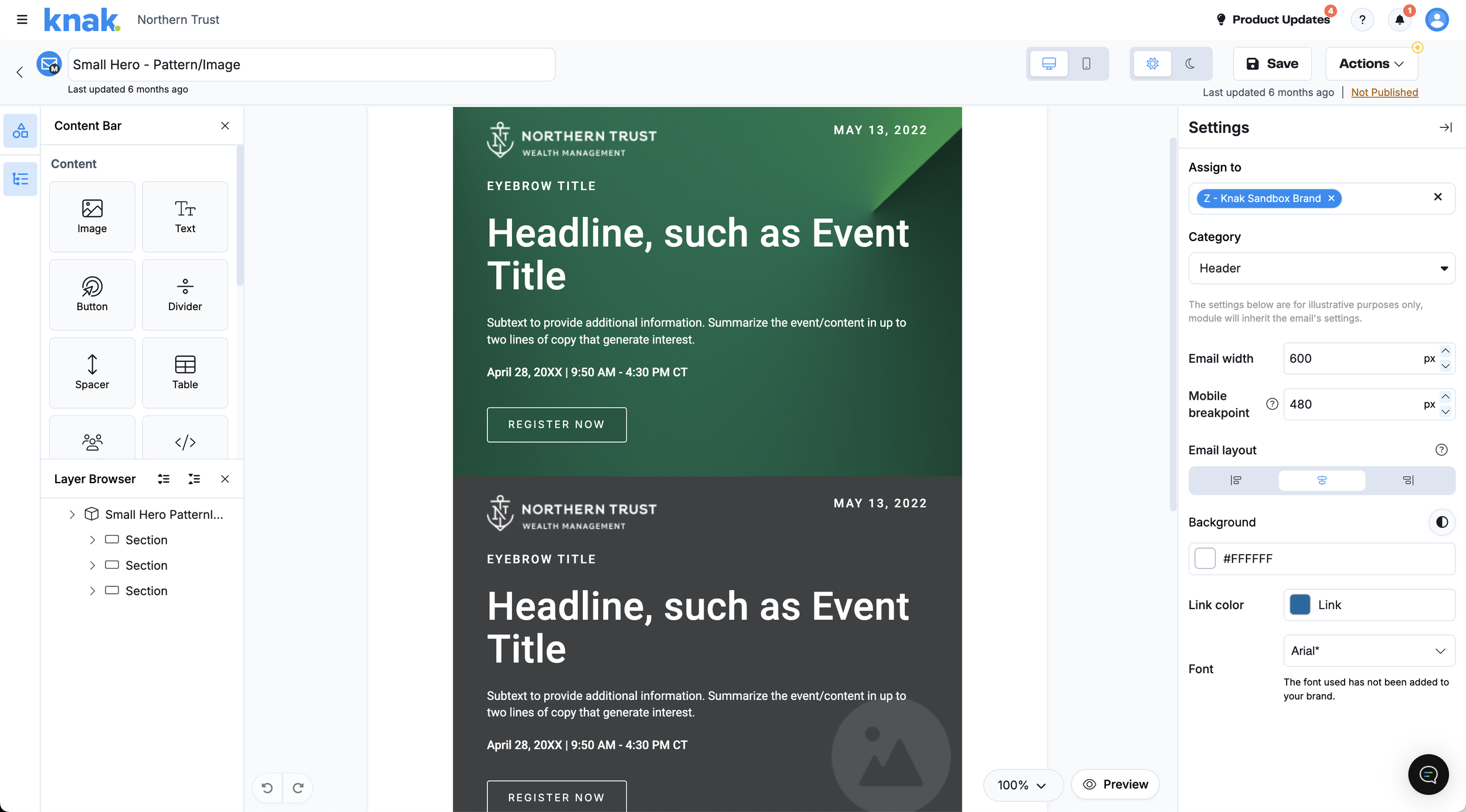
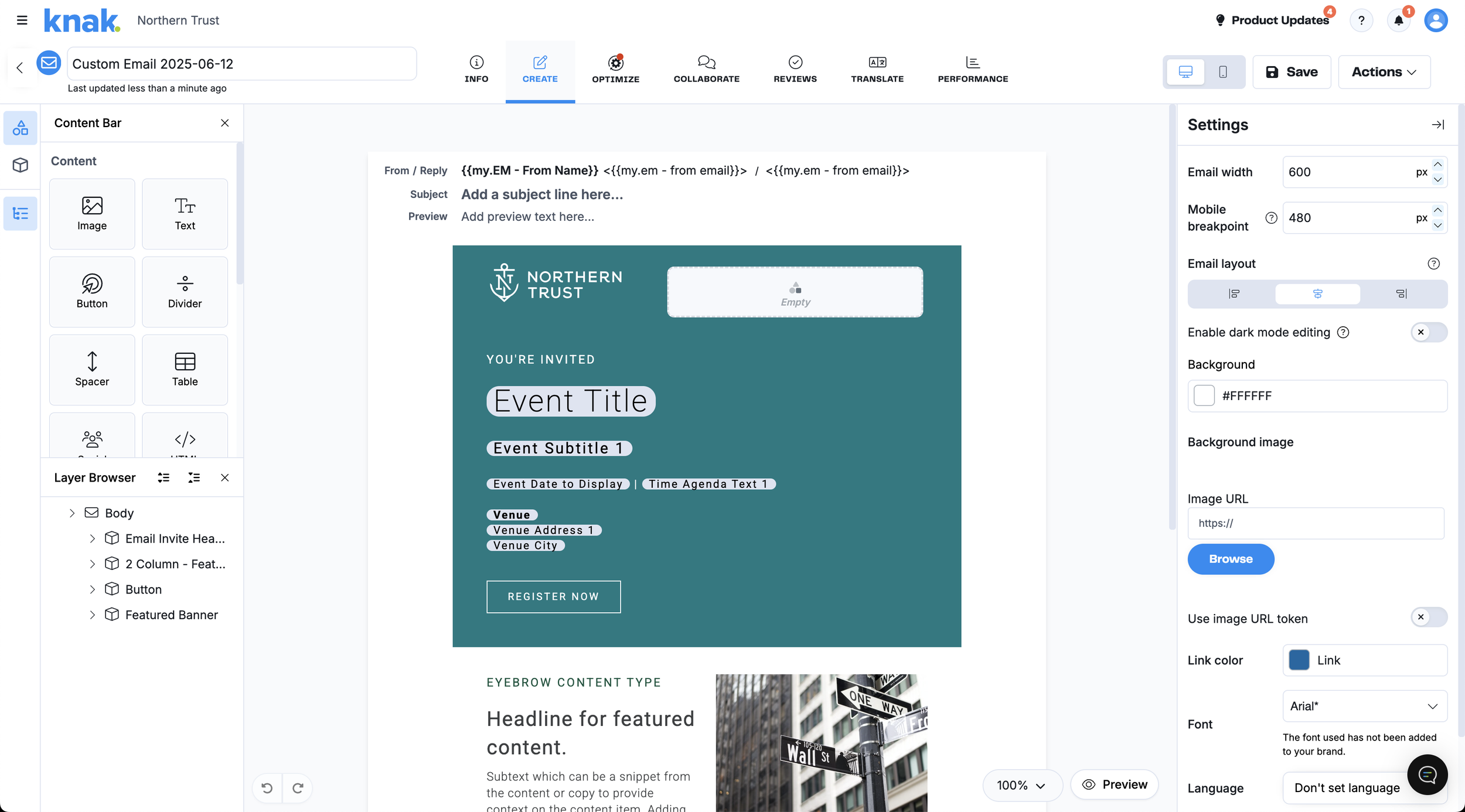
I led the design and rollout of Northern Trust's Knak product — a governed library of reusable email and landing page modules, organized by content type, paired with standardized campaign templates for recurring campaign types, like webinars, full event series, and manual invitations. The system replaced ad hoc production with a shared, no-code component architecture that let marketers assemble on-brand campaigns without touching code, while still giving each business unit room to onboard and mature at its own pace.
Knak is fundamentally about turning fragmented, code-dependent production into a scalable, governed system that makes speed and brand consistency the default rather than the exception.
Led
Module library architecture and category taxonomy
Campaign template standardization
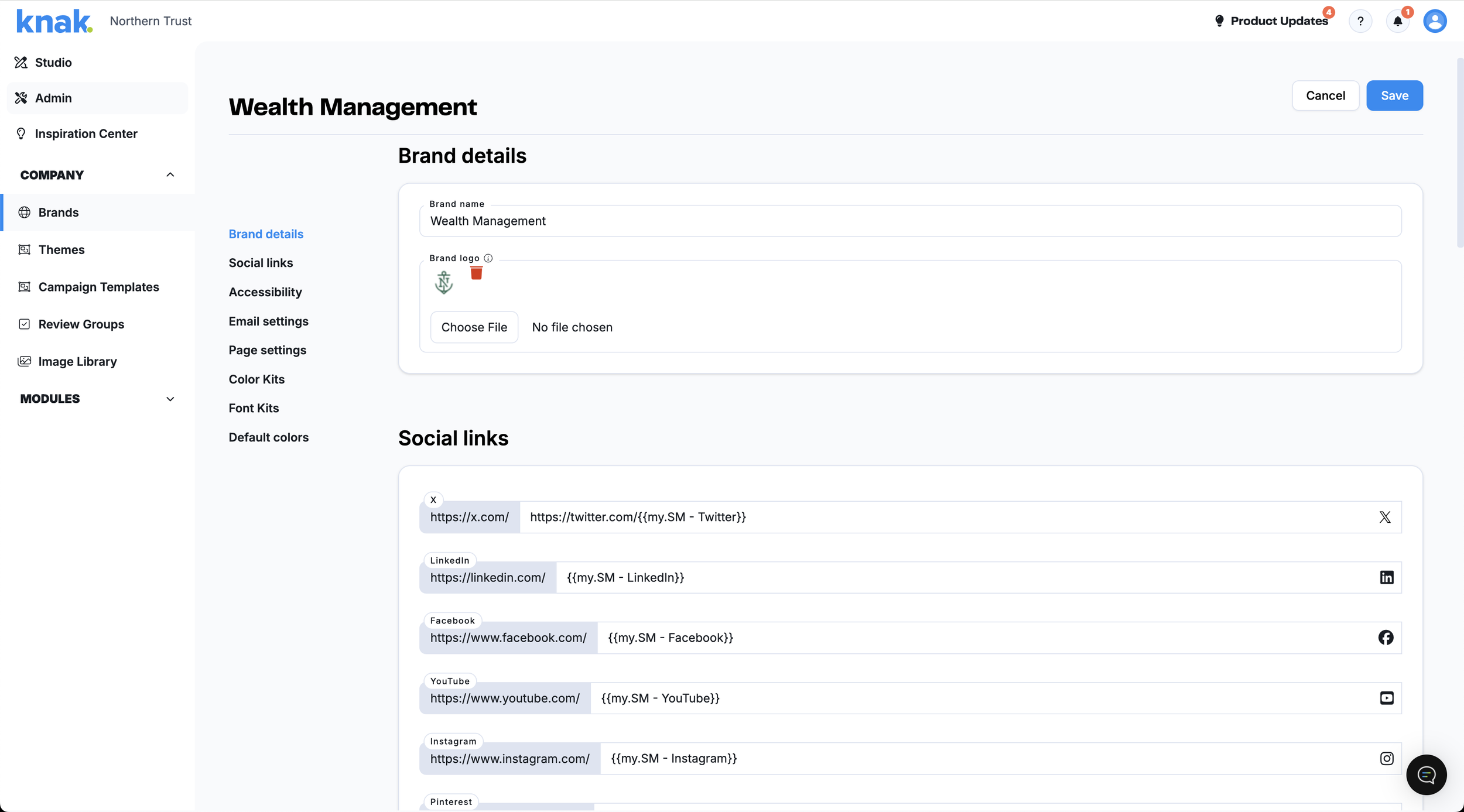
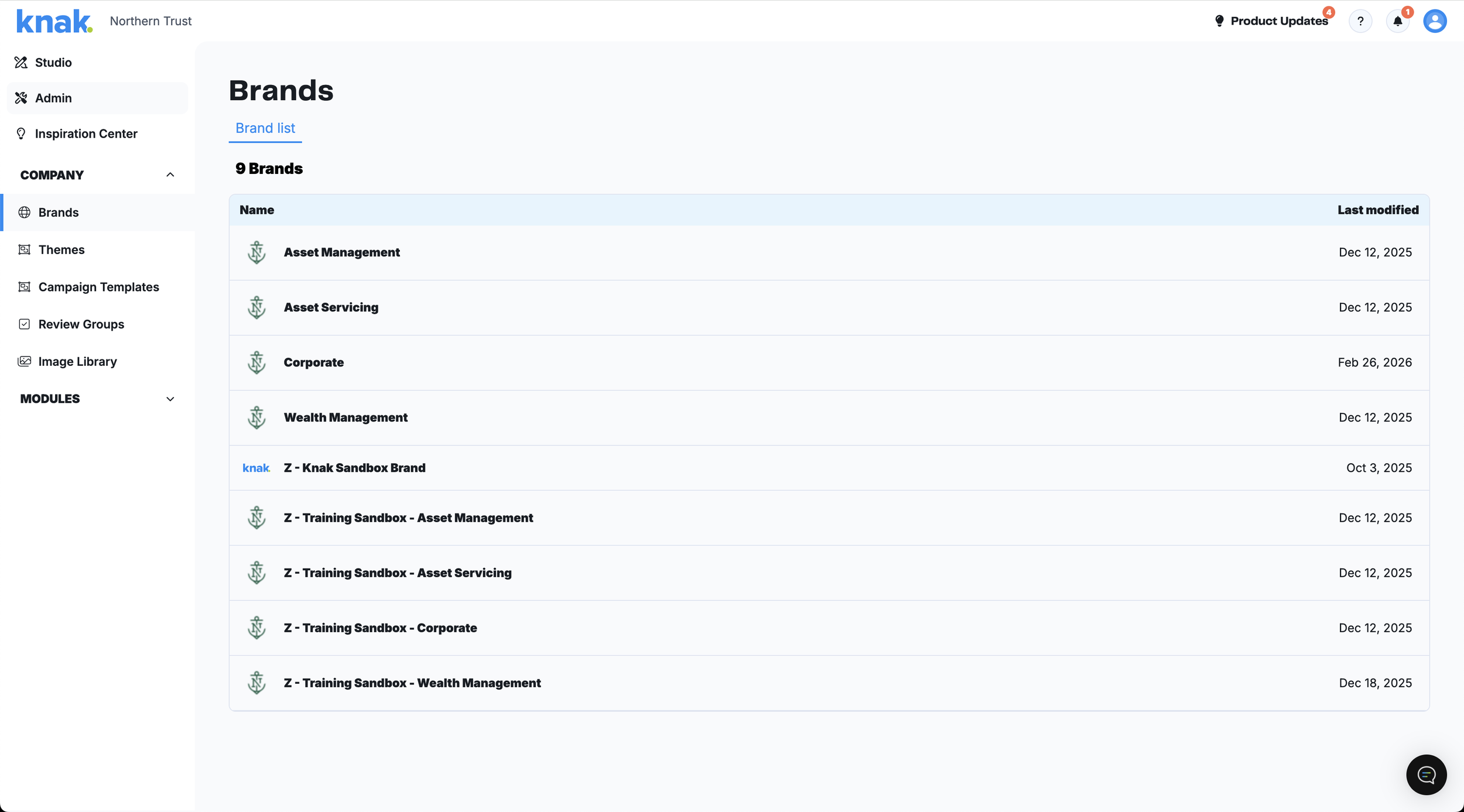
Brand governance and assignment framework
Component settings standards (page width, mobile breakpoints, background, link color, typography)
Cross-business-unit training and phased rollout strategy
Adoption tracking and governance documentation
Role
Lead Product Designer
Collaborated On
Marketing operations workflows
Brand and compliance review process
Business unit marketing enablement
Training sandbox environments
Platform Scope
Email campaign production
Landing page production
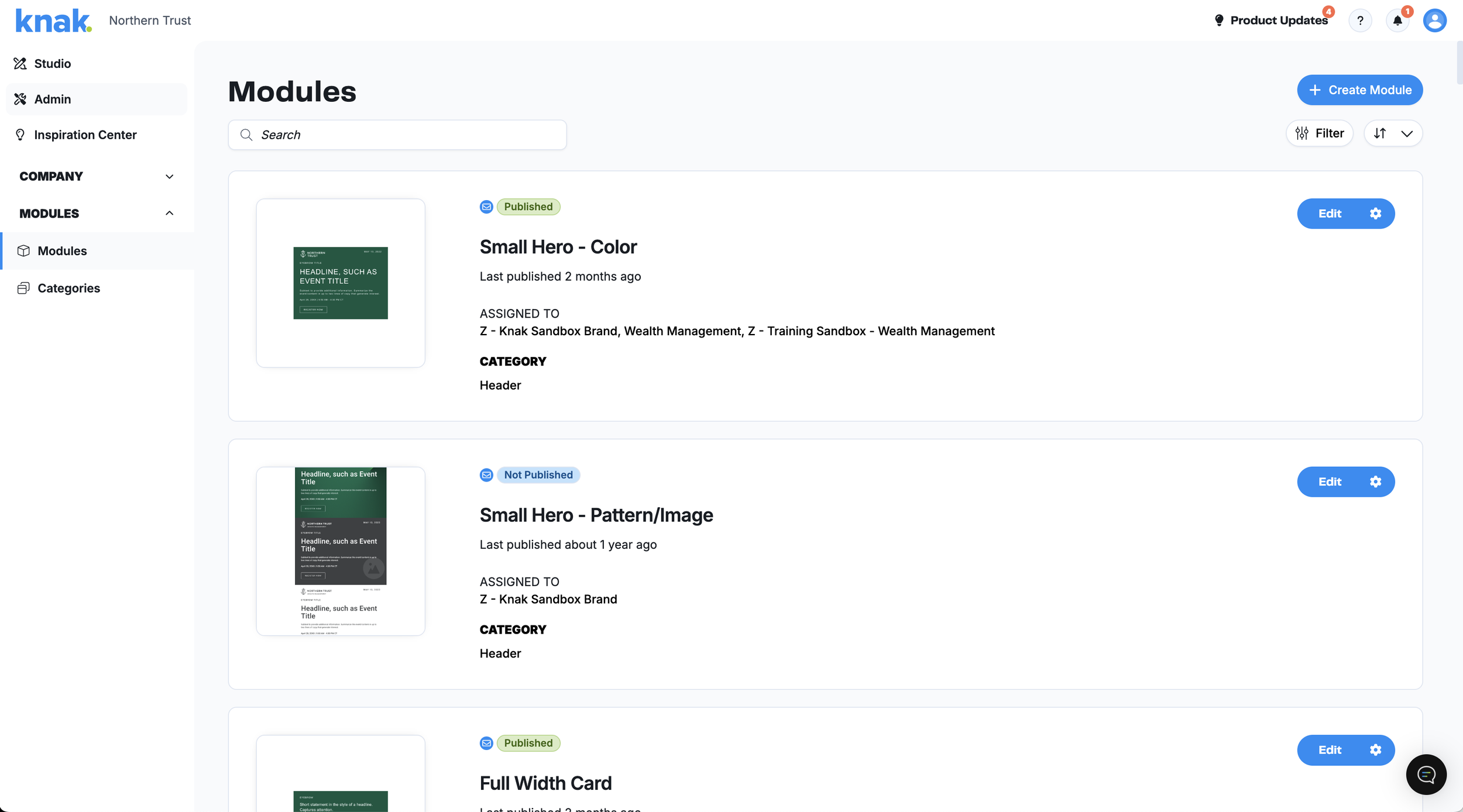
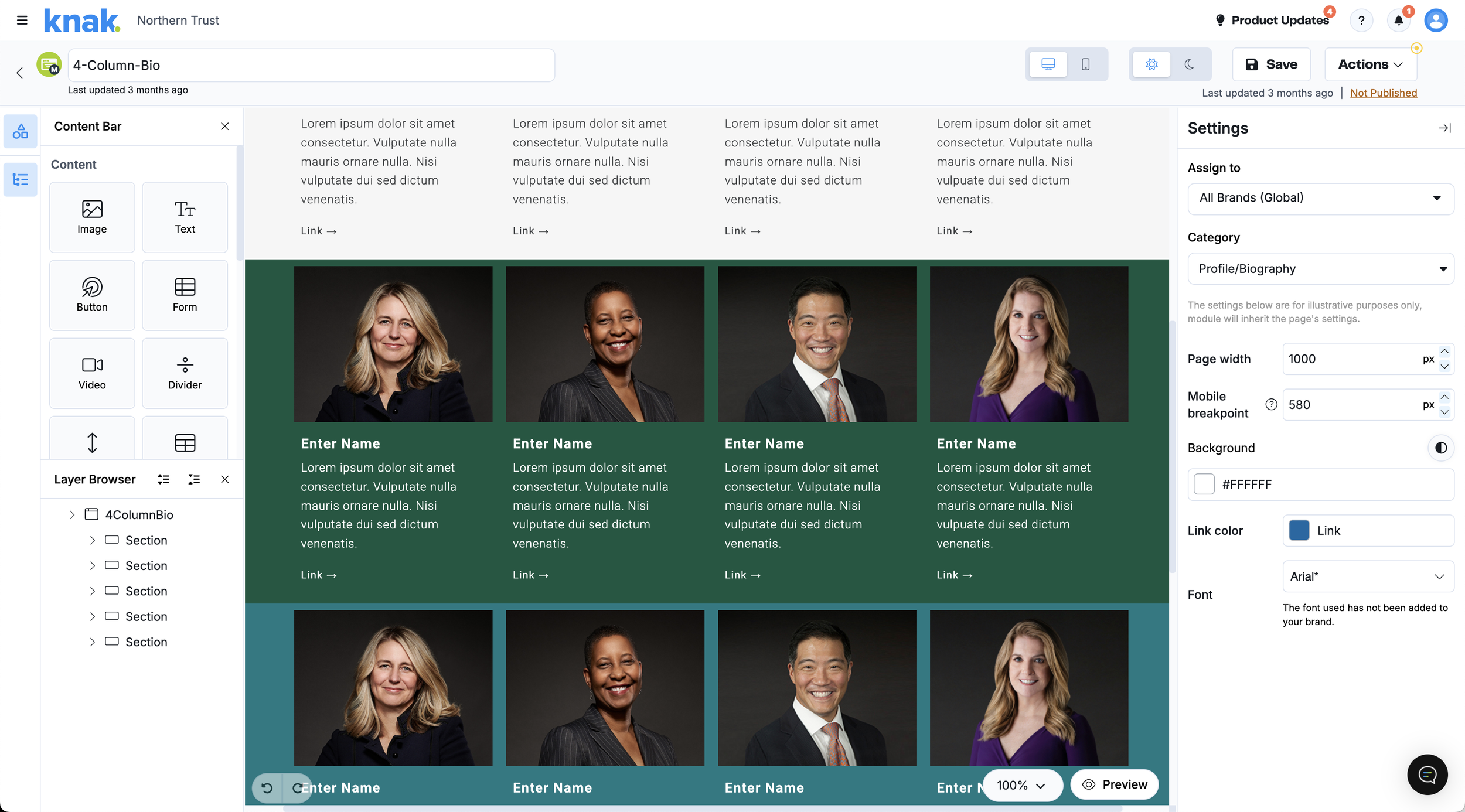
Reusable module library (headers, heroes, cards, bio grids, and more)
Campaign templates
Business units: Asset Management, Asset Servicing, Corporate, Wealth Management
The organization needed a system that could:
Replace manual coding with governed, reusable components
Standardize recurring campaign types across business units
Preserve brand-specific flexibility within a shared framework
Support a phased, business-unit-by-business-unit rollout
Give marketers a self-service way to build without engineering or code
The Challenge
Before Knak, campaign production at Northern Trust depended on a patchwork of Marketo templates and hand-coded HTML maintained separately by each business unit.
Before Knak:
Publishing a single campaign took an average of 16 days from request to launch
Email builds relied on manual HTML coding, averaging roughly 6 hours per build
Branding and layout consistency varied by business unit and by builder
No shared library of reusable components existed across teams
Onboarding a new business unit meant rebuilding production knowledge from scratch
There was no governed path for scaling the system across the wider organization
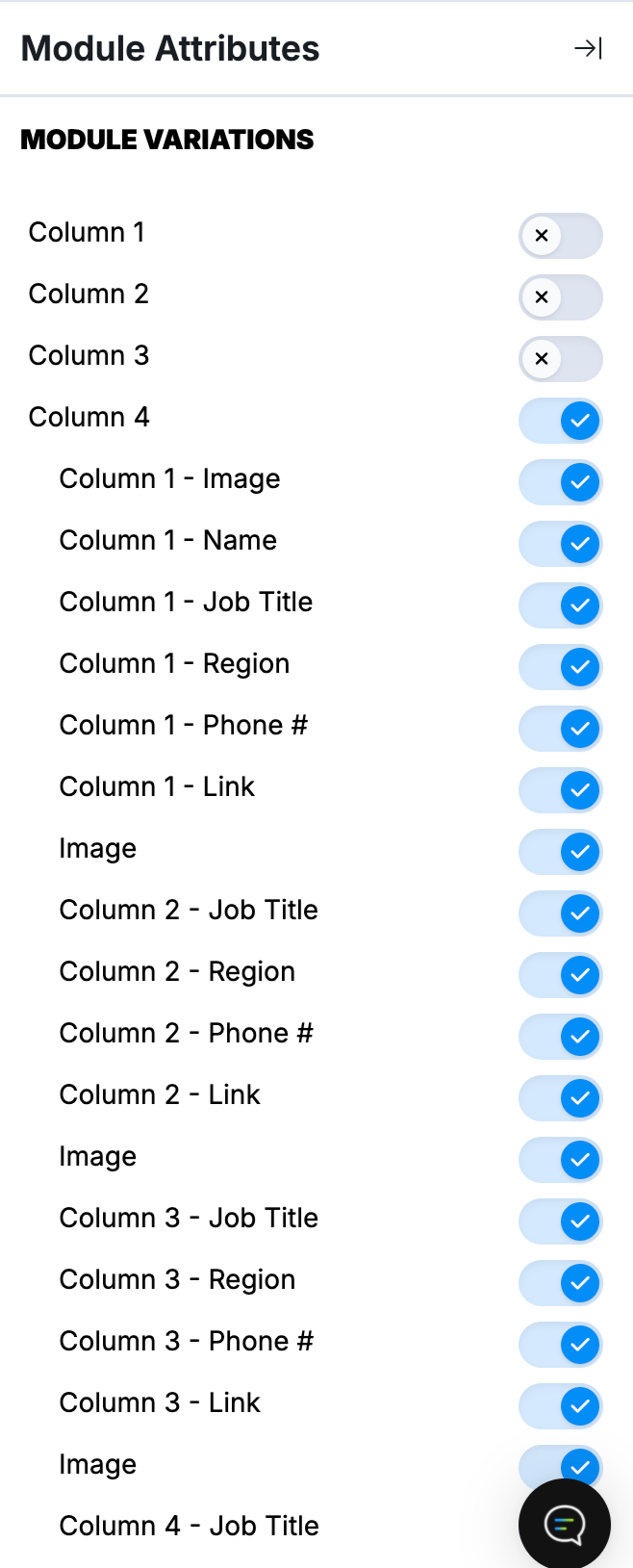
Knak's module library organized reusable content blocks — small heroes, bio grids, cards, and similar patterns — by category (Header, Profile/Biography, and others) and assigned each to specific brands or, where appropriate, to all brands globally. Every module carried a consistent settings framework: page width, mobile breakpoint, background, link color, and typography, giving marketers control within a governed structure rather than free-form design.
Component Architecture & Governance Framework
The system included:
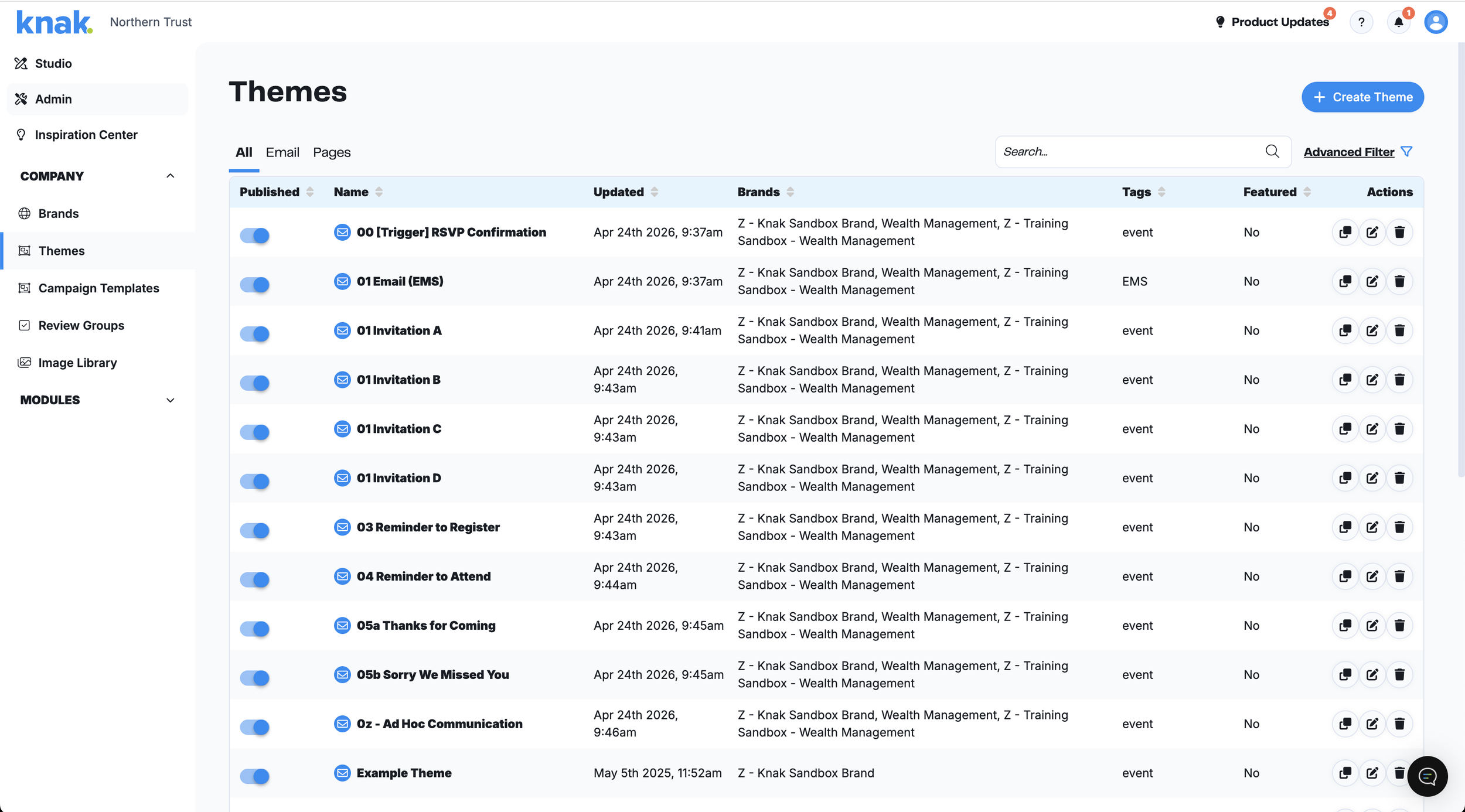
A categorized module library
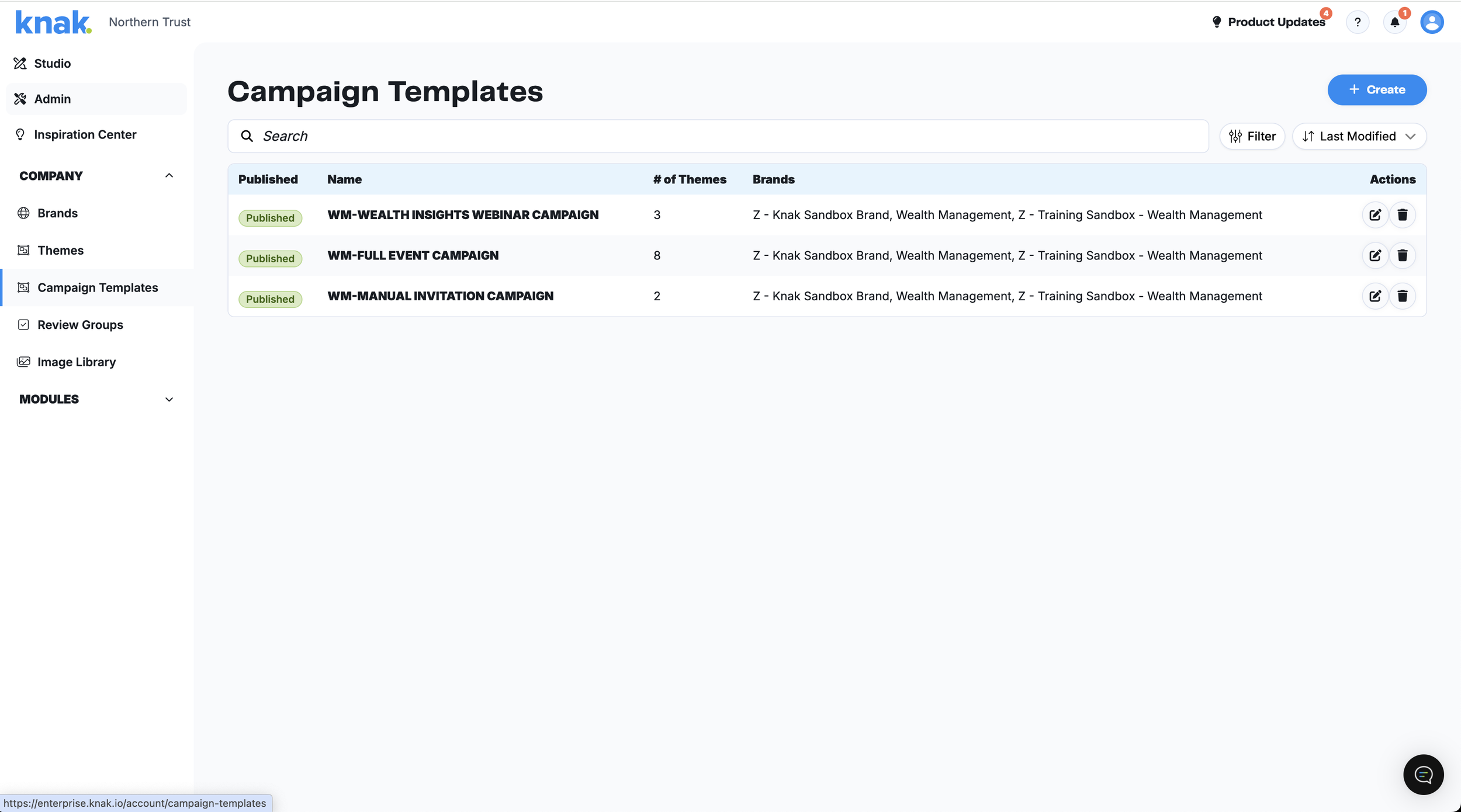
Standardized campaign templates for recurring formats (webinar campaigns, full event campaigns, manual invitations)
Shared settings for tokens, spacing, breakpoints, and typography
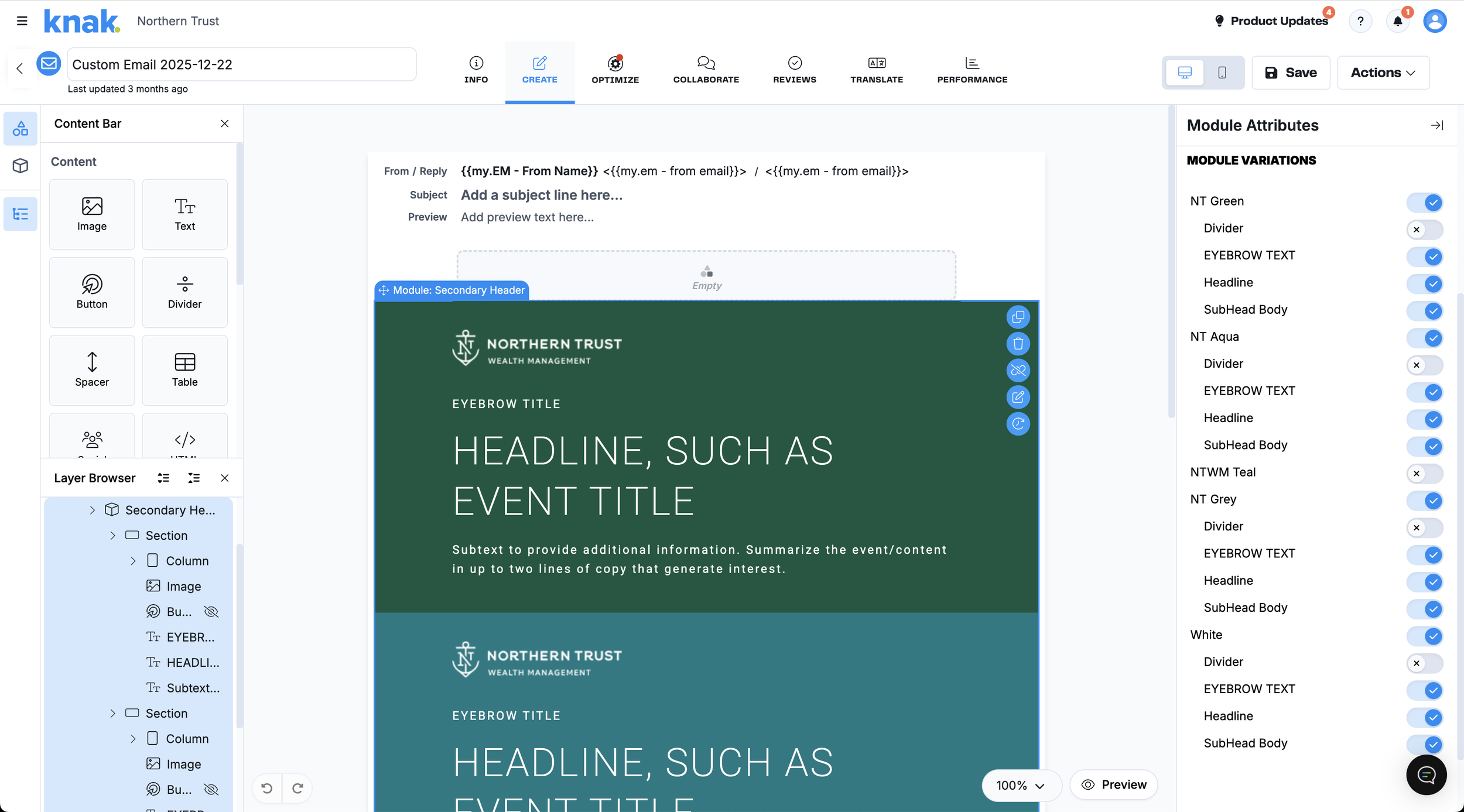
Desktop and mobile previews for light and dark modes across a variety of OS and browser types
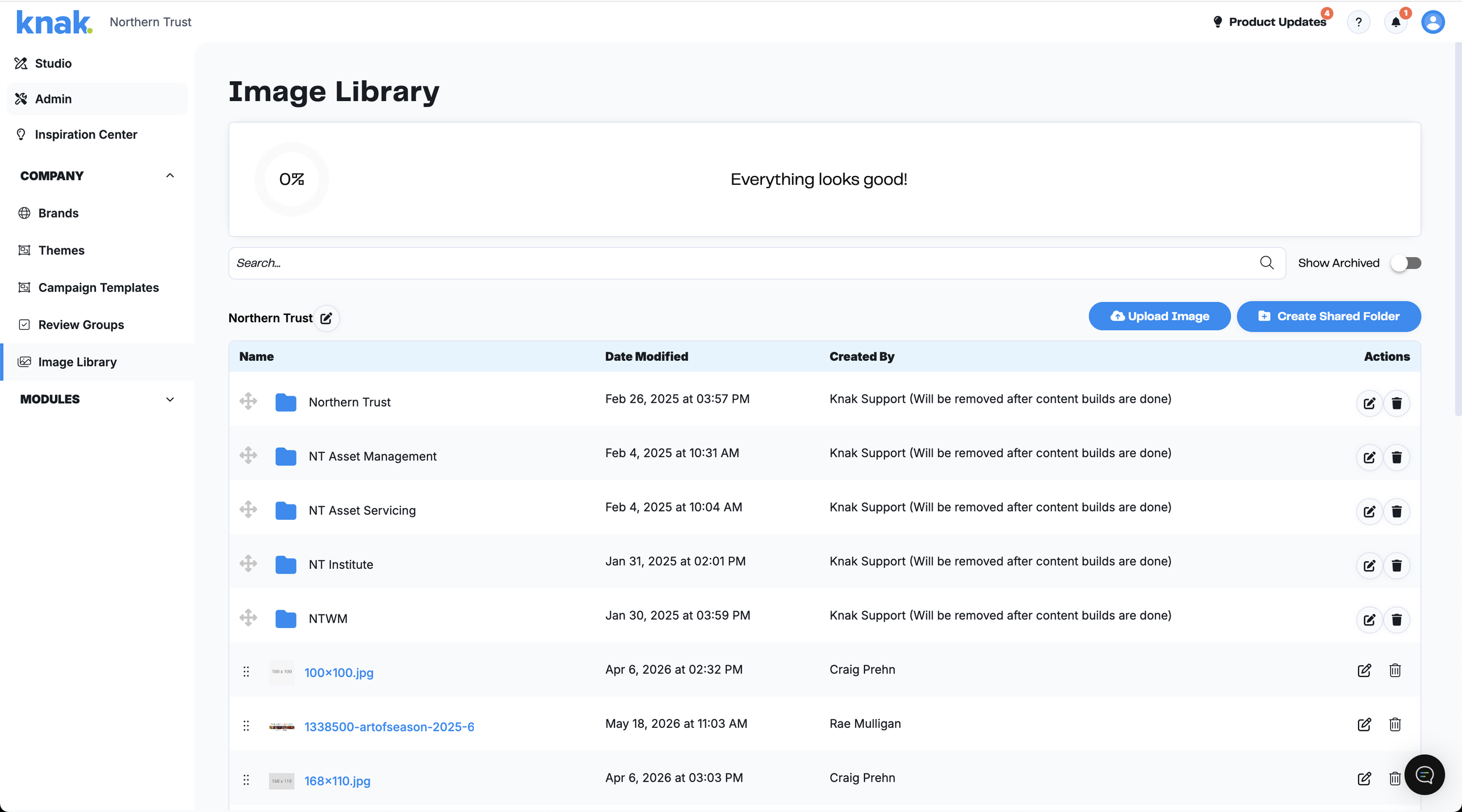
An Inspiration Center reference library so marketers could browse examples or choose an existing template before building
Dedicated training sandboxes, letting new business units learn the system without touching live production libraries
This structure meant a business unit's marketers could assemble an on-brand email or landing page by dragging in governed modules and campaign templates, rather than briefing a designer or developer for a one-off build.
Knak was rolled out incrementally rather than launched enterprise-wide at once. The first business unit went from concept to live launch in two months, and additional business units were onboarded roughly every three months after that — each getting a dedicated training sandbox to build familiarity with the module library and governance standards before working in production.
This staggered approach allowed the module library and campaign templates to mature with real-world usage feedback before each new business unit adopted them. It gave the separate business unit teams a way to build confidence in the system ahead of go-live.
Phased Rollout & Adoption
Results:
Reduced campaign publishing workflows from an average of 16 days to 2.3 days
Reduced individual email build times from roughly 6 hours to under 9 minutes
Modules and governed templates were used in 96% of published assets within 6 months
First business unit launched within 2 months of concept, with additional business units onboarded roughly every 3 months thereafter
Replaced fragmented Marketo/HTML production with a single governed, no-code system across Asset Management, Asset Servicing, Corporate, and Wealth Management